Imagine education from a fresh perspective—one that views children not as empty vessels waiting to be filled, but as whole, capable individuals embarking on a lifelong journey of self-formation. From the moment of birth, children are driven by powerful internal forces that guide their growth, helping them adapt to their unique time, place, and culture. This remarkable ability to evolve and adapt is a defining trait of human development.
The Montessori approach is built upon this profound understanding of human growth. Dr. Maria Montessori dedicated her life to observing how children change over time, identifying key developmental stages that shape their path to maturity. Through her scientific work, she identified four distinct "Planes of Development," each with its own physical, cognitive, and social needs:
- The First Plane: Infancy & Early Childhood (Birth to Age 6)
- The Second Plane: Childhood (Ages 6 to 12)
- The Third Plane: Adolescence (Ages 12 to 18)
- The Fourth Plane: Maturity (Ages 18 to 24)
Infancy to Early Childhood: The Transformative First Six Years
The first plane of development is a period of monumental physical and psychological growth. A newborn enters the world entirely dependent, unable to sit up, move, or communicate verbally. Yet, within just six short years, that same child is walking, talking, reading, writing, and asserting their independence with clear intellect and willpower.
Key Characteristics of the First Six Years
During this stage, young children require ample sleep to support rapid brain expansion. When awake, their natural curiosity knows no bounds. They explore their surroundings with relentless energy, using all five senses to touch, taste, hear, smell, and analyze everything in their reach.
The Conquest of Independence
The primary task of this phase is achieving functional independence. Young children have an innate drive to care for themselves, care for their environment, and imitate the meaningful actions of adults. The unspoken mantra of the child in this stage is simple yet profound: "Help me do it myself!"
The Absorbent Mind & Sensitive Periods
Dr. Montessori observed that children under age six possess an "Absorbent Mind"—a unique ability to take in vast amounts of information effortlessly from their environment, like a sponge absorbing water. Within this phase, children pass through temporary windows of development known as Sensitive Periods:
- Movement: A deep need to move and refine gross and fine motor skills, building essential brain-body integration.
- Order: A strong desire for predictability and routines, which helps the child structure their internal understanding of how the world works.
- Language: An extraordinary sensitivity to speech, allowing children to acquire vocabulary and complex grammar patterns without formal instruction.
Language & Physical Milestones
The achievements during these first six years are astounding.
Physically, a child moves from total immobility to sitting, crawling, walking, running, self-feeding, and dressing.
In language, the progression is equally remarkable. Talking to newborns stimulates their vocal development, and research shows their vocal cords vibrate in response to adult speech. From making simple sounds at birth, a child expands their spoken vocabulary to around 200 words by age two, and an astonishing 10,000 words by age six. Providing a language-rich environment during these formative years is critical to establishing lifelong communication skills.
The Two Sub-Planes: Ages 0–3 and Ages 3–6
Dr. Montessori further divided the First Plane into two distinct sub-phases:
1. Ages 0 to 3 (The Unconscious Absorbent Mind)
During these first three years, development is largely driven by innate, unconscious forces. Children absorb everything in their environment—attitudes, language, emotional tones—without filter or defense. During this stage, adults must protect and support the child's natural developmental path, providing a secure, loving space without imposing artificial pressures.
2. Ages 3 to 6 (The Conscious Absorbent Mind)
Between ages three and six, children become consciously aware of their actions and intentions. Their willpower emerges, accompanied by a drive to organize, classify, and understand their experiences. They become active learners, sorting shapes, matching colors, categorizing language, and building an understanding of how objects relate to one another.
Social Development in the First Plane
Social connections evolve significantly over these six years:
- From Birth to Age 3: A child’s world revolves primarily around their family and primary caregivers. They tend to engage in solitary exploration or parallel play (playing alongside peers rather than directly with them).
- From Ages 3 to 6: Children naturally seek a broader social environment beyond the home. They enter mixed-age communities where they learn to interact with peers, share resources, collaborate on work, and practice essential social skills like grace and courtesy.
How We Prepare the Environment at My Quest Montessori School
To support the rapid development of the First Plane, the child’s environment must be intentionally prepared to meet their developmental needs:
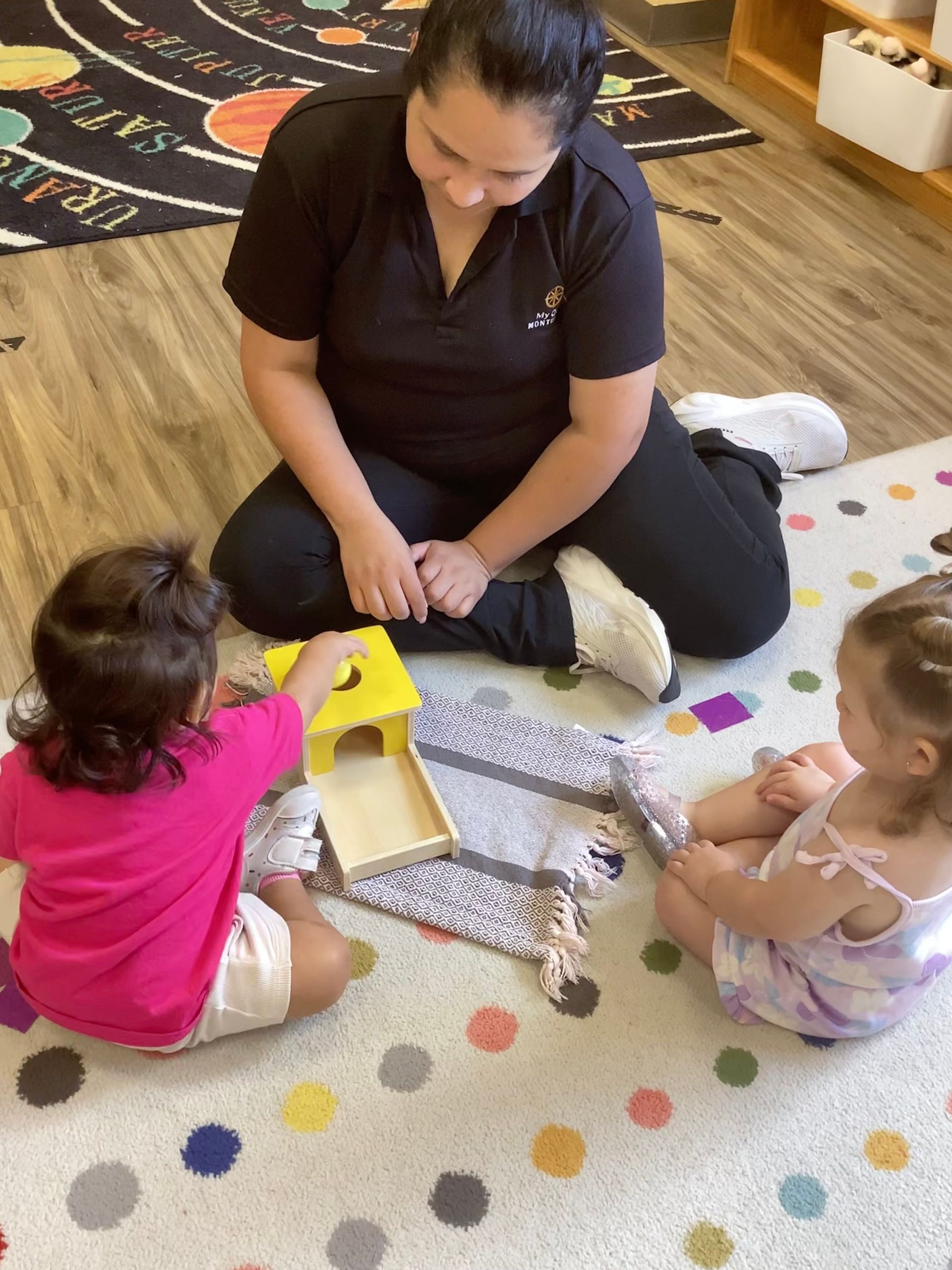
- Safety & Freedom of Movement: In our Infant Program, we maintain a peaceful, shoe-free environment with low Montessori floor beds instead of restrictive cribs, allowing infants to safely explore as soon as they wake up.
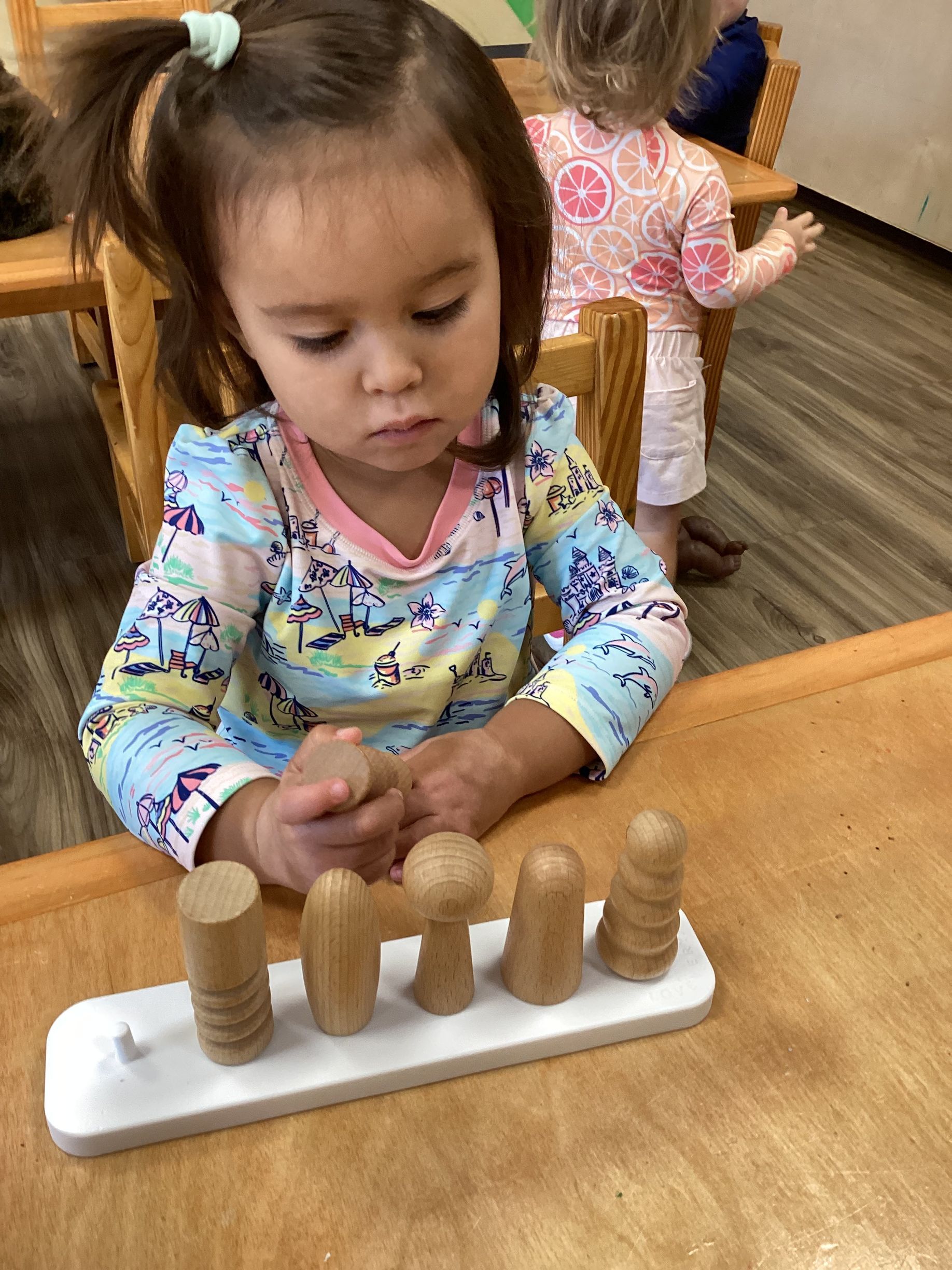
- Order & Child-Sized Accessibility: In our Toddler Community, open shelves, child-sized furniture, and accessible cleaning tools empower young children to select work, clean up spills, and care for their space independently.
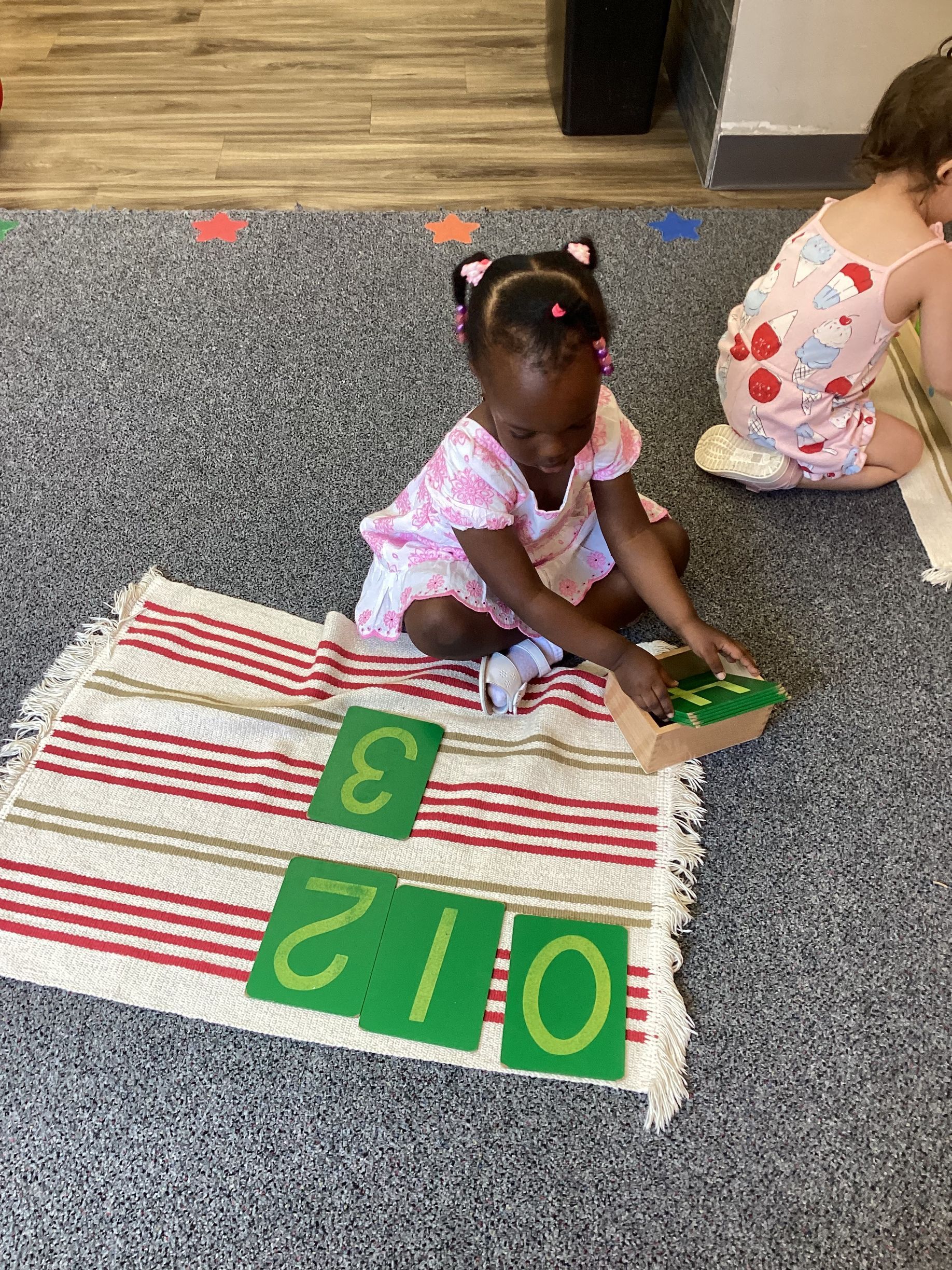
- Language-Rich Classrooms: In our Primary Classrooms, Guides speak with rich, precise vocabulary, introducing tactile language materials like Sandpaper Letters and Metal Insets to bridge spoken language into confident writing and reading.
- Practical Life Activities: Real-world tasks like pouring water, preparing healthy snacks, buttoning coats, and sweeping floors build fine motor control, hand-eye coordination, and deep executive function.
When we respect and nurture the unique characteristics of the First Plane of Development, we give children the foundation they need to grow into confident, capable, and self-directed learners.
Discover the Montessori Difference in Cypress, TX
Are you curious to see how our prepared environments support your child’s natural path toward independence? We invite you to
visit My Quest Montessori School to see our Infant, Toddler, and Primary classrooms in action.