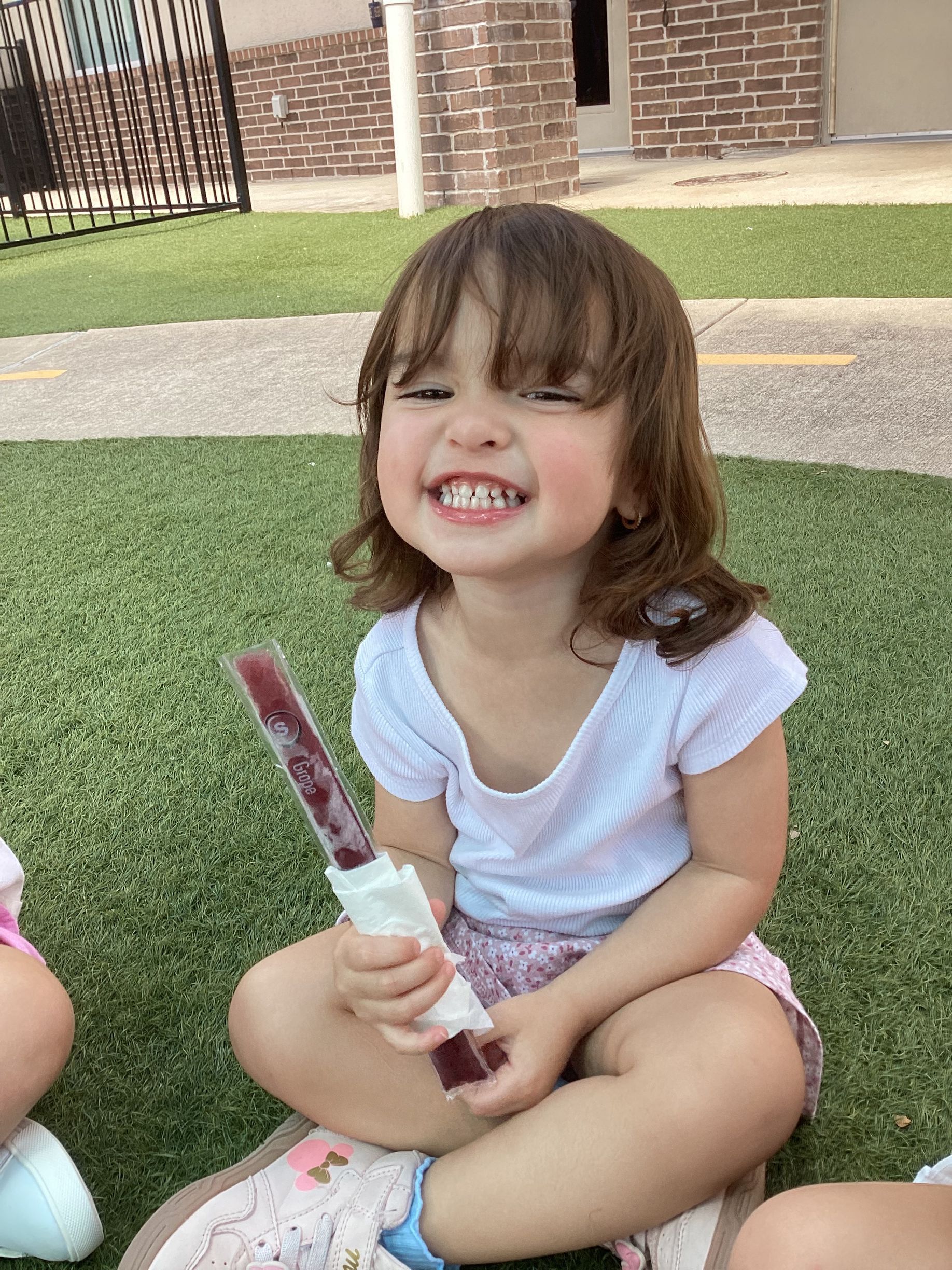
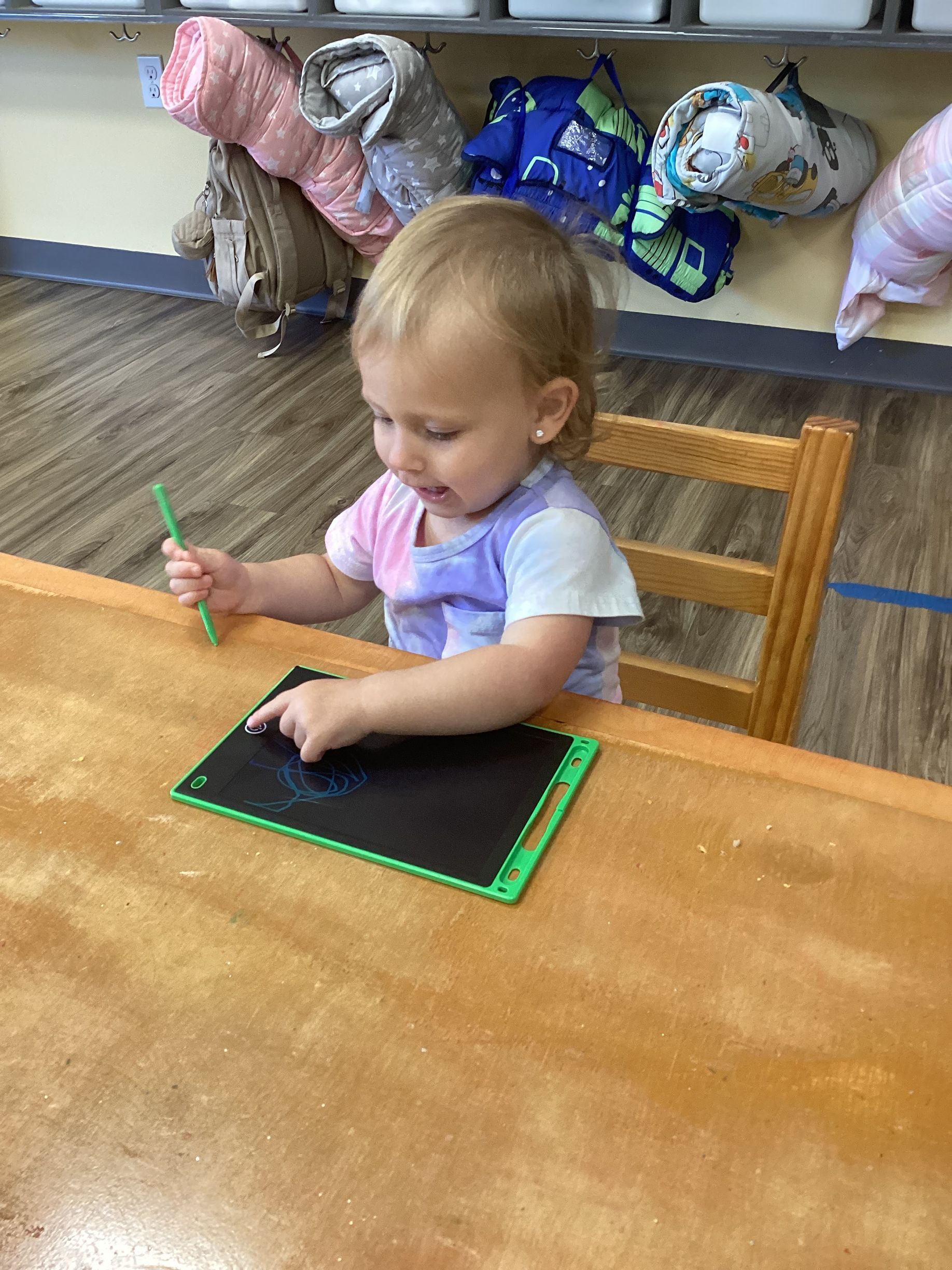
Young children have an innate drive to move, test their balance, and explore what their bodies can do. If you have ever watched a child carefully balance along a sidewalk curb or trace a pattern on a rug with their toes, you have seen this drive in action!
In our Montessori classrooms at My Quest Montessori School—from our active Toddler spaces to our vibrant Primary environments—we do not ask children to sit still for long periods. Instead, we provide intentional, purposeful opportunities for them to refine their balance, equilibrium, and physical control.
One of the most foundational and beloved movement exercises in Montessori education is called Walking on the Line.
What is Walking on the Line?
Developed by Dr. Maria Montessori after observing children's natural delight in balancing games, Walking on the Line is a precise movement exercise practiced on an elliptical line placed on the classroom floor.
While it may look like a simple game to an outside observer, walking along this curve requires a remarkable combination of concentration, body awareness, fine motor control, and inner discipline.
The Step-by-Step Journey Toward Mastery
In our prepared environments, movement lessons are broken down into small, achievable steps. Rather than expecting children to master balance all at once, our guides lead them through a gradual progression:
1. Preliminary Spatial Awareness
Before children begin walking, they learn how to navigate the space together safely and respectfully:
- Coming to the Line: Children learn to gather quietly at the edge of the ellipse when they hear a gentle auditory cue (such as a single drumbeat).
- Finding Personal Space: Through playful practice, children learn how to spread out along the line so they do not bump into their neighbors.
- Facing the Same Direction: Children practice turning to face the back of the child in front of them, establishing order and a unified flow.
Taking time to master these preliminary steps builds social awareness, patience, and a deep respect for personal space.
2. Walking to a Rhythm
Once spatial awareness is established, children practice walking along the line to a steady beat. Matching their steps to a rhythm requires active listening and body control.
When the beat stops, the children freeze in place and turn inward. Our guides vary the rhythm—speeding up slightly, slowing down, and always returning to a calm, natural heartbeat pace to bring the children back to a centered, quiet state.
3. Equilibrium and Balance Challenges
As children gain mastery over basic steps, we introduce "points of interest" that challenge their center of gravity and elevate their concentration:
- Heel-to-Toe Walking: Walking precisely heel-to-toe along the curve of the line.
- Carrying Objects: Walking while carefully balancing a tray, a small bowl of water, a beanbag on their head, or a sphere on a wooden spoon.
- Changing Posture: Walking while placing hands on hips, reaching arms overhead, or gently turning their head side-to-side without stepping off the line.
Rhythm, Music, and Emotional Regulation
In addition to physical balance, walking on the line serves as an introduction to musical expression. Children learn to adapt their movements to different musical tempos—marching, tiptoeing, or swaying.
Crucially, every exercise always concludes with a slow, peaceful walk. This intentional cool-down lowers heart rates, quiets the room, and helps children transition smoothly back into focused, independent work.
The Benefits Beyond the Classroom
Through these movement activities, children at My Quest Montessori develop more than physical coordination. They gain:
- Deep Concentration: Balancing an object while walking requires total mental presence.
- Self-Regulation: Learning to slow down their bodies voluntarily helps children manage impulse control throughout the day.
- Spatial and Social Awareness: Moving together in a shared space fosters a sense of community care and mutual respect.
Experience the Montessori Difference in Cypress
At My Quest Montessori School, every detail in our environment—from our peaceful, shoe-free Infant room to our movement exercises in Primary and our active Fall After School program—is designed to support your child’s total development.
We would love to show you how our structured, joyful classrooms help children build lifelong confidence, focus, and independence.
🗓️
Schedule a Private Tour:
Book your family visit today! Limited openings are currently available for our Infant, Toddler, Primary, and Fall After School programs.