Have you ever walked into your child’s bedroom or playroom, taken a look at the state of affairs, and quietly backed out to temporarily avoid dealing with the chaos within?
You are not alone. It is a feeling almost every parent experiences at some point.
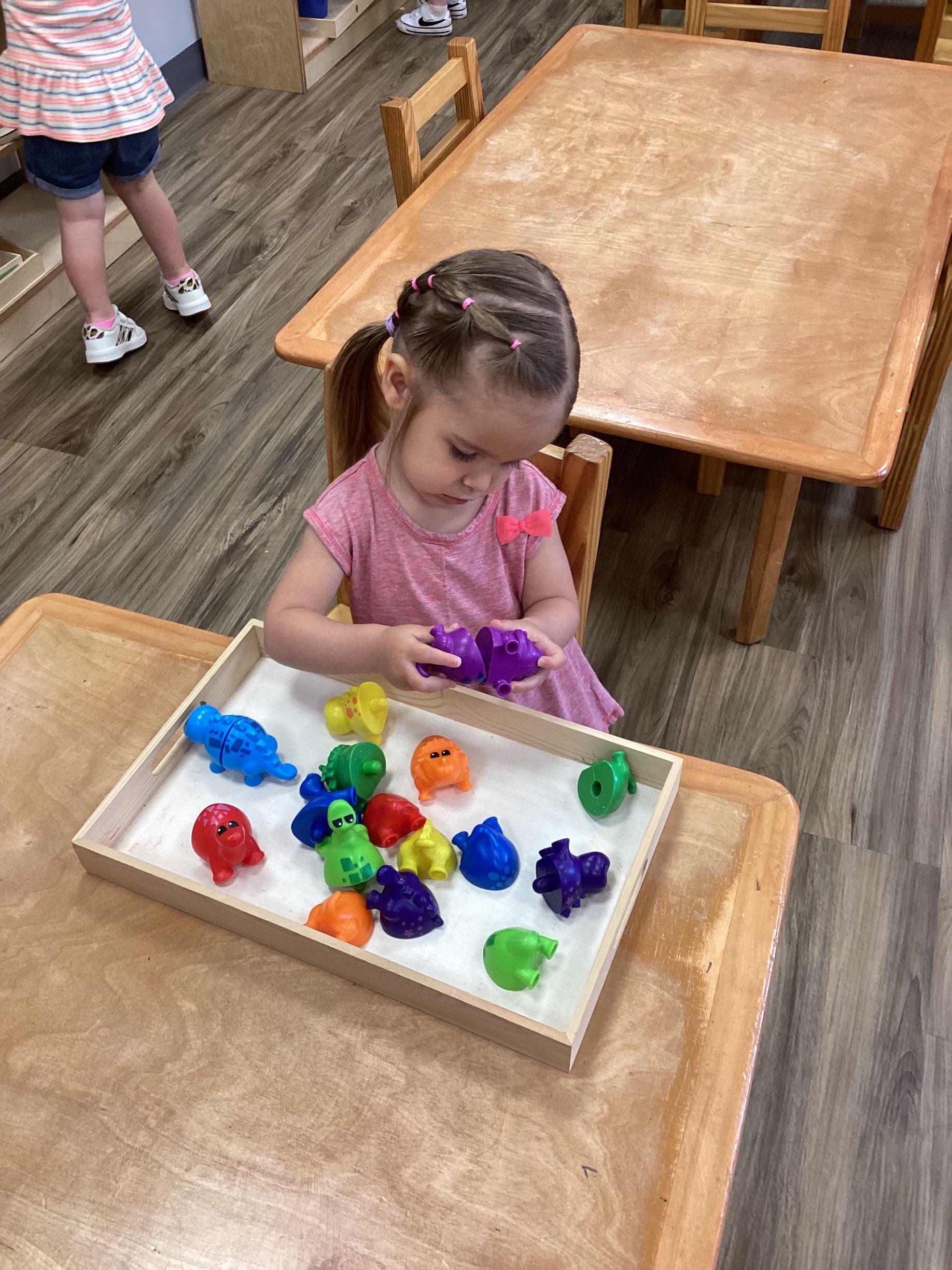
In our prepared environments at My Quest Montessori School, visitors often remark on how calm, focused, and orderly the children are. A major secret behind that peaceful concentration isn't magic—it is the thoughtful organization and rotation of learning materials on low, accessible shelves.
When you apply this same Montessori principle of toy rotation at home, the transformation is remarkable. The benefits are wide-ranging:
- Deeper Engagement: Children focus longer and play more intentionally when presented with fewer choices.
- Independent Clean-Up: When every item has a clear, accessible home, children can clean up after themselves without feeling overwhelmed.
- Renewed Appreciation: Rotating toys brings back a sense of novelty and joy without needing to constantly purchase new items.
- Mindful Consumption: You will gain absolute clarity on what toys truly support your child’s development and what they have naturally outgrown.
Here is our practical, six-step guide to creating an inspiring, peaceful, and joyful play space at home.
Step 1: Observe Before You Act
While it is tempting to jump straight into purging and organizing, taking time to observe first ensures you make informed, child-centered decisions.
Grab a notebook and sit quietly nearby while your child plays. Resist the urge to direct or intervene unless there is a safety hazard. Observing authentically for a few days will give you valuable insight into their current developmental stage.
Questions to consider during observation:
- Which specific toys does my child naturally gravitate toward?
- What developmental skills are they working on right now (e.g., fine motor control, heavy work, problem-solving, imaginative play)?
- Which toys remain untouched day after day?
- How easily can my child navigate the physical space on their own?
Step 2: Assess and Declutter
This step is easiest to tackle when children are asleep or away at school. Grab a favorite warm drink, clear a large floor space, and bring out all the toys from around the house.
Sort everything into four simple categories:
- Active Keepers: Items your child is currently using and loving.
- Rotation Storage: Items to store away in bins for future rotation.
- Donate/Pass Along: Quality toys your child has outgrown.
- Discard: Broken toys or items missing essential pieces.
Step 3: Prepare the Environment
In Montessori, the physical space acts as a "third teacher." As your child grows, their physical environment should adapt to meet their changing needs for movement and independence.
Elements of a Montessori-inspired home space:
- Low, Open Shelving: Avoid deep toy chests where items get buried, broken, or dumped onto the floor. Open shelves allow children to see their choices clearly.
- Natural Elements & Calm Lighting: Soft lighting and uncluttered surfaces promote a calm nervous system.
- Baskets & Trays: Use small baskets or trays to hold multi-piece activities, keeping sets complete and easy to carry.
- Defined Functional Work Areas: Create distinct zones—such as a quiet reading corner with a floor cushion, a low table for art, or an open rug area for building.
- Hidden Storage: Keep off-rotation items tucked away in closets or high cabinets out of sight.
Step 4: Select with Intention
Now for the most rewarding part: curate the space. Look back at your observation notes and select a small, deliberate assortment of toys that meet your child's current interests.
The most important rule here is less is more. Presenting 4 to 8 distinct, complete activities on low shelves is far more inviting to a child than 20 choices piled together. When choices are limited, deep concentration begins.
Step 5: Guide and Model Clean-Up
Once the space is ready, invite your child in to explore. Show them where each activity lives and establish clear, positive expectations around order.
- Model the Routine: Show them how to carry one basket to a work mat or rug, complete the activity, and return it to its home on the shelf before choosing the next item.
- Provide Child-Sized Tools: Keep a small dustpan, brush, or soft cloth accessible so your child can take genuine pride in caring for their own environment when spills happen.
- Be Patient: Independent clean-up is a skill built over time through gentle consistency and modeling.
Step 6: Rotate and Repeat
A common question we hear from parents is: "How often should we rotate toys?"
While every home is unique, a general guideline is roughly once a month—or whenever you notice your child losing interest or becoming overwhelmed by the space. Simply observe for a few days, leave out the items that are still deeply engaging, and swap out the rest with fresh options from your storage bins.
Seeing Montessori in Action
Creating a prepared environment at home is a powerful way to bridge the gap between school and family life. When children experience order, beauty, and independence both at school and at home, their self-confidence soars.
Interested in seeing how our prepared environments support child development across our Infant, Toddler, Primary, and After School programs? We welcome you to
tour our Cypress campus and see our classrooms firsthand.